A fever is a temperature of 100.4°F (38°C) or higher. It is a sign that the body is fighting an infection, usually a virus, and it is not harmful in itself. In a child older than 3 months, how your child is acting tells you more than the number does. The exception is a young baby.
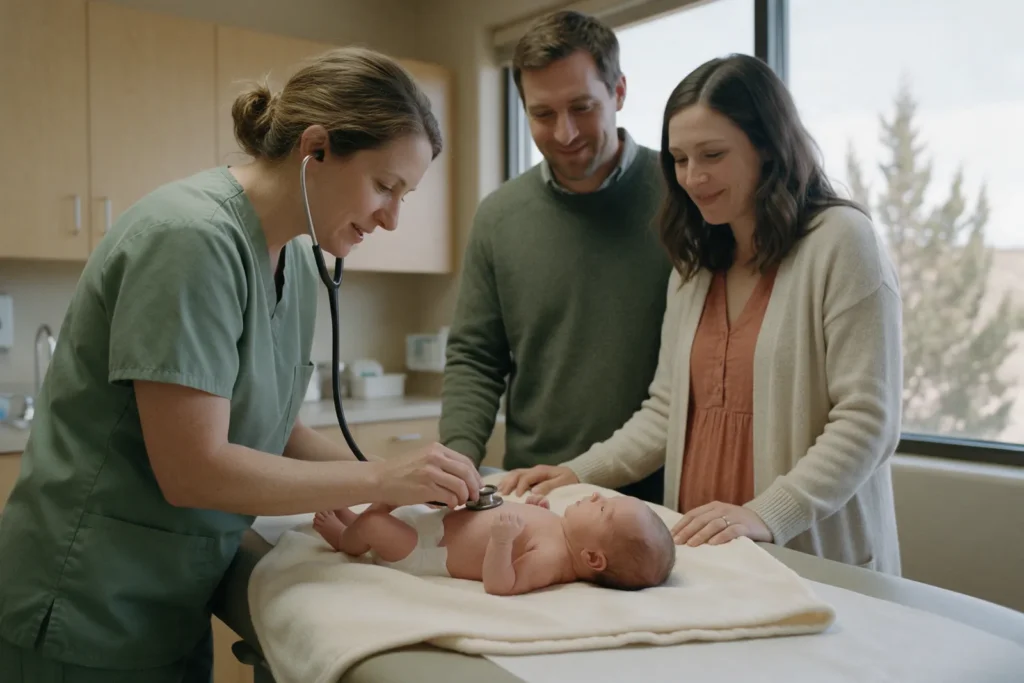
Under 3 months old?
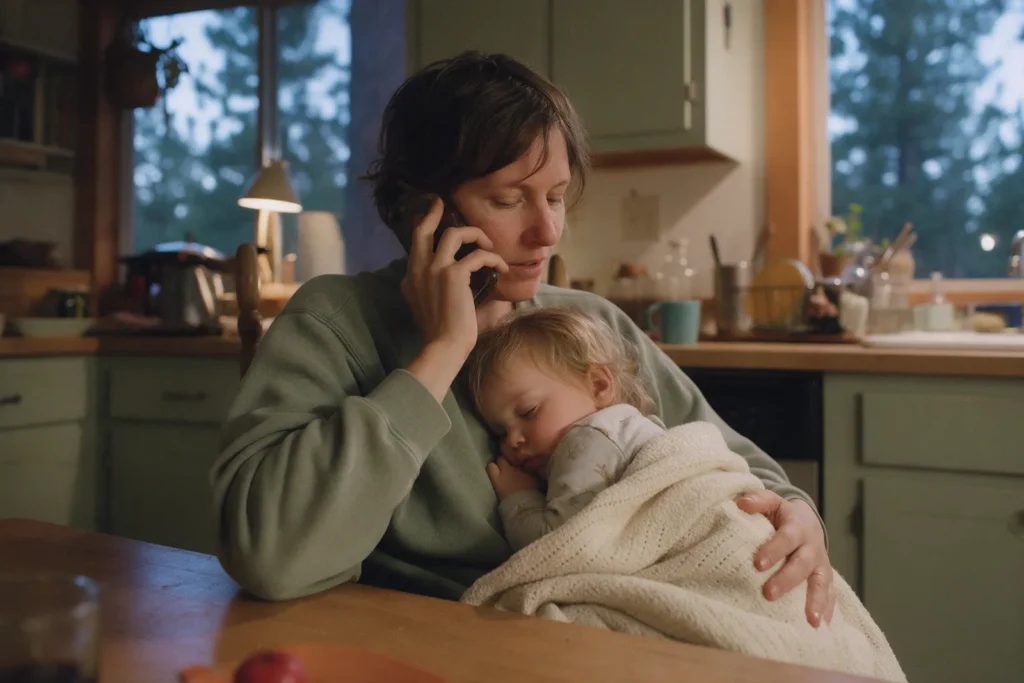
A temperature of 100.4°F or higher in a baby under 3 months needs a call to us straight away, at any hour: (541) 555-0148. Do not give fever medicine first. It can hide the fever, and babies this young usually need to be seen the same day.
How to take a temperature at each age
Different thermometers suit different ages. Whatever you use, tell us the reading and the method. There is no need to add or subtract a degree.
| Age | Most reliable | Also fine |
|---|---|---|
| Under 3 months | Rectal | Forehead (temporal artery) to screen, then confirm rectally |
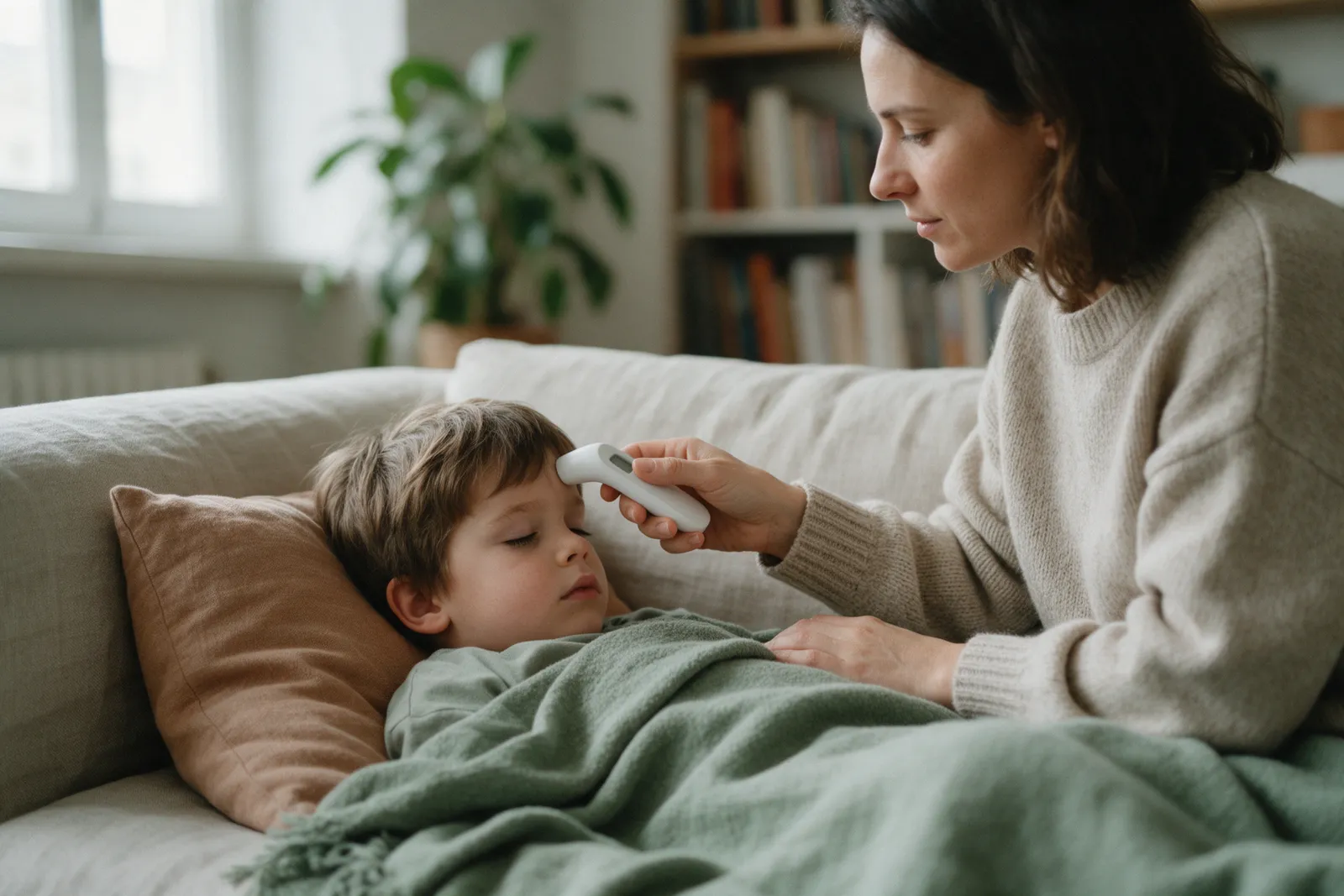
| 3 months to 4 years | Rectal or forehead | Ear, from 6 months |
| 4 years and older | Under the tongue | Forehead or ear |
An armpit reading is the least accurate at any age. It is fine as a quick check, but confirm a high or borderline reading another way. After a bath or coming in from the cold, wait 15 minutes before you measure.
What the number does and does not tell you
Many parents worry that a high fever will damage the brain. Fevers caused by infection do not do that. A fever of 103°F is not automatically more serious than one of 101°F, and a child with a mild fever can be sicker than one with a high one.
What matters more is how your child looks when the fever comes down. A child who drinks, makes eye contact and wants to play once a dose of medicine has worked is reassuring. A child who stays listless, floppy or hard to wake, even with a lower temperature, needs to be seen.
Keeping your child comfortable
The aim of treatment is comfort, not a normal reading. If your child is resting quietly, you do not need to wake them for a dose.
- Fluids first. Small, frequent sips of water, milk, breast milk or formula. Ice pops count.
- Light clothing and a comfortable room. Skip the extra blankets, and never use ice baths or rubbing alcohol.
- Acetaminophen (Tylenol) can be used from 3 months. Under 12 weeks, only if one of our providers has told you to.
- Ibuprofen (Motrin, Advil) can be used from 6 months.
- Dose by weight, not age, with the syringe or cup that came with that bottle. Kitchen spoons vary too much. For a child under 2, call us for the dose the first time.
- Never give aspirin to a child or teenager. It is linked to Reye syndrome, a rare but serious illness.
- Check the labels of cold medicines. Many already contain acetaminophen, which makes it easy to double up.
Do not alternate acetaminophen and ibuprofen unless one of our providers has suggested it for your child. Weight-based dosing charts are on our parent resources page, and the provider on call can give you a dose over the phone.
Febrile seizures
A small number of children between 6 months and 5 years have a seizure when their temperature climbs quickly. It is frightening to watch, but most last a minute or two and cause no lasting harm.
- Lay your child on their side on the floor, away from anything hard.
- Put nothing in their mouth, and do not try to hold them still.
- Time it. If it lasts longer than five minutes, call 911.
Call us after any first seizure, even a short one, so we can see your child.
When to call us
Call (541) 555-0148 if your child:
- is under 3 months with a temperature of 100.4°F or higher (see above)
- is under 2 and the fever has lasted more than 24 hours
- is 2 or older and the fever has lasted more than 3 days
- has a temperature above 104°F (40°C) more than once
- has a fever that went away for a day and then came back
- has a fever and is unusually sleepy or cannot be comforted
- has a fever with a stiff neck, a severe headache, a severe sore throat or ear pain, pain when peeing, or a rash
- has a fever and keeps vomiting, or is not peeing much
- has a long-term condition such as a heart problem, sickle cell disease or a weakened immune system
For breathing trouble, blue lips, or a child you cannot wake, call 911. Our guide on when to call, come in, or go to the ER goes through the rest.
Sources
- American Academy of Pediatrics, HealthyChildren.org: Fever: when to call the pediatrician
- American Academy of Pediatrics, HealthyChildren.org: How to take a child’s temperature
- American Academy of Pediatrics, HealthyChildren.org: Febrile seizures
- American Academy of Pediatrics, HealthyChildren.org: Treating your child’s fever: FAQs for parents