Smoke season in Central Oregon usually runs from July into September, and some summers it settles over Bend for days. Children take in more smoke than adults do: they breathe more air for their body size, and they spend more time running around outdoors. The two things that protect them most are simple. Cleaner air indoors, and less hard exercise outside when the air is bad.
Check the air before you plan the day
Smoke can change by the hour, so look at the current reading rather than yesterday’s forecast. The AirNow fire and smoke map and Oregon DEQ’s OregonAIR app both show readings near you. Use the Air Quality Index (AQI) like this:
| AQI | For most children | For babies and children with asthma or heart or lung conditions |
|---|---|---|
| 0 to 50 Good | Play as usual | Play as usual |
| 51 to 100 Moderate | Play as usual | Watch for coughing or shortness of breath |
| 101 to 150 Unhealthy for sensitive groups | Take more breaks, keep it lighter | Shorter, easier time outdoors. Keep the rescue inhaler close |
| 151 to 200 Unhealthy | Move hard play and sports indoors | Stay indoors |
| Over 200 Very unhealthy | Stay indoors, in filtered air | Stay indoors, in filtered air |
Make one room a clean-air room
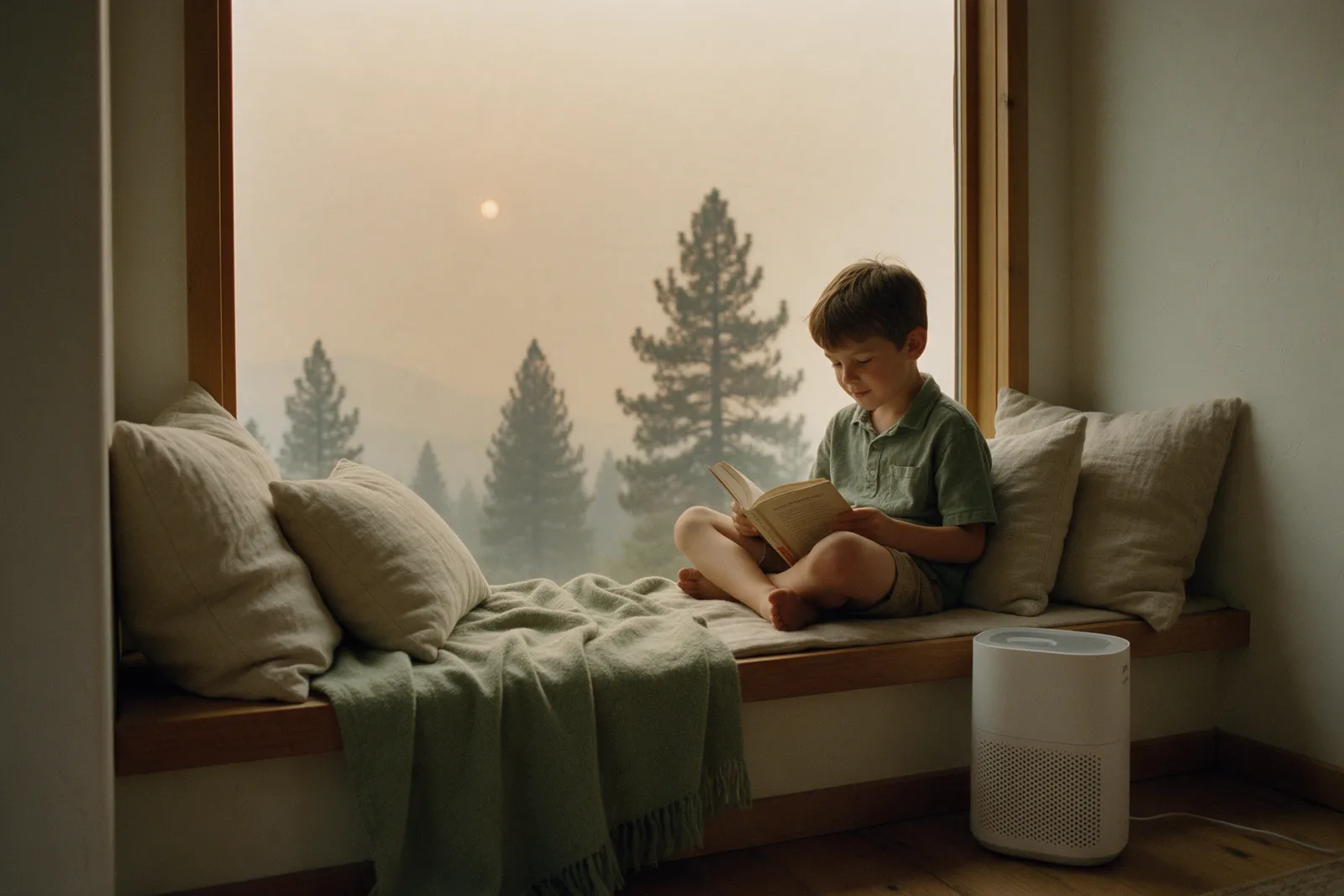
You do not need to filter the whole house. One room where your children sleep and spend most of the day is enough.
- Close the windows and doors in that room.
- Run a portable HEPA air cleaner sized for the room. The box lists a square footage; go by that.
- If you have central air, set it to recirculate and use the highest-rated filter your system takes, ideally MERV 13.
- A box fan with a MERV 13 furnace filter strapped to the back works well as a low-cost air cleaner. Keep it where small children cannot reach it, and do not leave it running unattended.
- Do not add smoke indoors. Skip candles, incense, frying and smoking while the air is bad.
- In the car, set the air to recirculate.
Masks: helpful only if they fit
An N95 or KN95 mask filters smoke, but only when it seals against the face. That is hard to achieve on a small child.
- Never put a mask on a child under 2.
- Between 2 and about 7, a good fit is unlikely. Keeping them indoors does more.
- Older children and teens can wear a snug child-size or small N95 or KN95 for short trips outside.
- Cloth and surgical masks do little against smoke.
- Take the mask off if your child finds it hard to breathe in it, and never use one as a reason to stay outside longer.
If your child has asthma
Smoke is one of the strongest asthma triggers there is. Before the season starts, check that your child’s asthma action plan is current, that the rescue inhaler has not expired, and that there is a spare at school or camp with a spacer. Keep controller medicines going every day as prescribed. On smoky days, a child who usually manages fine may need the rescue inhaler before activity.
Dr. Marcus Whitfield leads our asthma and allergy care, including breathing tests in the office. If your child has needed their rescue inhaler more than usual this summer, book a visit before the next smoke event rather than after it.
Symptoms, and when to call
Common and usually mild: a scratchy throat, stinging eyes, a runny nose, a dry cough or a headache. Bring your child inside to filtered air, offer water, and these usually ease within hours.
Call us at (541) 555-0148 if your child:
- starts wheezing, or has chest tightness
- has a cough that does not settle once they are indoors
- needs their rescue inhaler more often than every four hours
Call 911 if your child is struggling to breathe, is too breathless to speak, or has blue or gray lips.
Sports, camps and school
Oregon high school sports follow an air quality policy that limits or cancels outdoor practice as the AQI rises, and many camps and schools do the same. Ask your child’s coach or camp what theirs is before the season starts. If your child has asthma, let them know.
Sources
- U.S. Environmental Protection Agency: Protect children from wildfires and smoke
- American Academy of Pediatrics, HealthyChildren.org: Wildfires: taking care of your children and yourself
- AirNow: Fire and smoke map
- Oregon Health Authority: Wildfire smoke and your health